Home › Guides › Foundation Pier Types Explained
Foundation Pier Types Explained
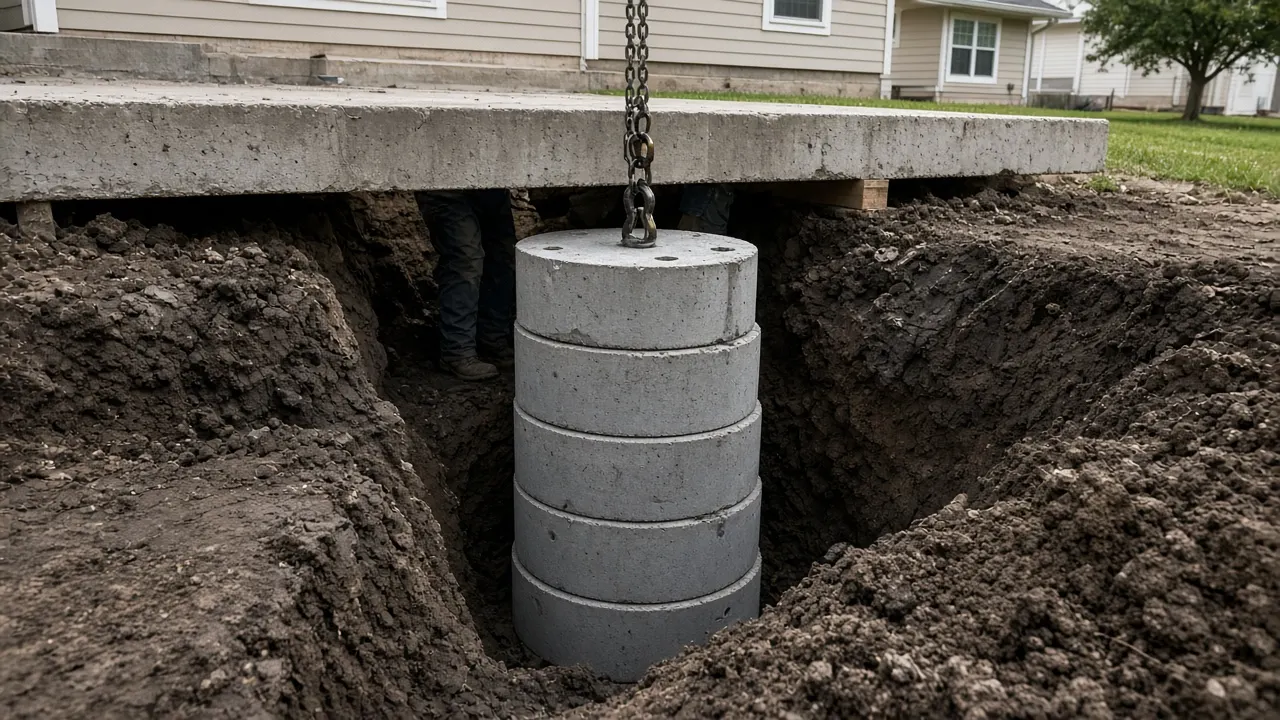
Most Texas slab repair works by installing piers beneath the grade beam and lifting the slab back toward level. Here are the main options you will see on quotes.
Pressed (segmented) concrete piers
Precast concrete cylinders are hydraulically pressed into the soil one on top of another until resistance is reached. They are widely used across Texas and are usually the most economical option.
Steel push piers
Steel pipe sections are driven using the weight of the structure until they reach a load-bearing layer. They can reach greater depths than pressed concrete in some soils and are often priced higher.
Helical piers
Steel shafts with screw-like plates are turned into the ground. They work well for lighter loads and where torque can be measured to verify capacity.
Drilled (bell-bottom) concrete piers
A hole is drilled, sometimes with a widened bell at the bottom, reinforced with steel and filled with concrete. Often recommended by engineers in deep clay or where a specific depth is required.
Which is best?
There is no universal answer. Soil profile, home weight, budget and an engineer's recommendation should drive the choice.
FAQ
Which pier lasts the longest?
All common types can perform well when installed correctly for the site. Installation depth and quality matter as much as material.
Can different pier types be mixed?
Sometimes, but discuss it with an engineer so the whole home moves predictably.
Find a pro near you
DallasFort WorthHoustonSan AntonioAustinCorpus ChristiPlanoMcKinneyEl Paso